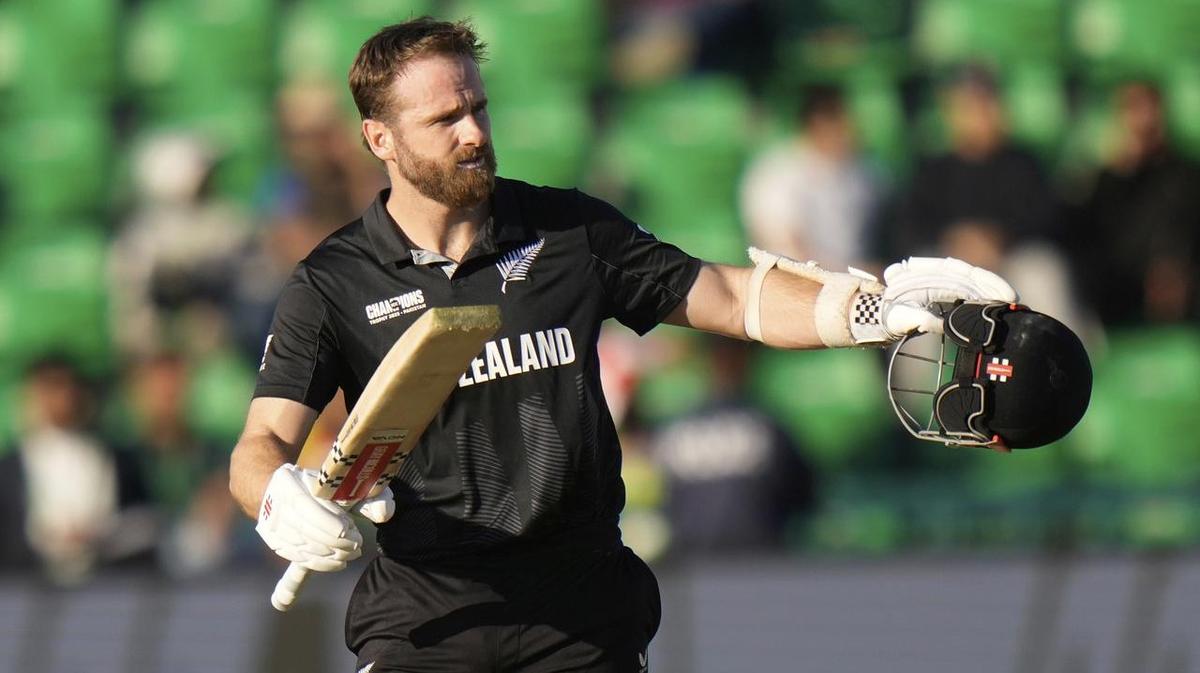
The quietest man in world cricket left the international stage exactly as he occupied it: without a hint of theatre, entirely on his own terms, and leaving a profound stillness in his wake. When the official confirmation dropped on June 12, 2026, it carried the force of a sudden structural collapse. Kane Williamson, the elegant anchor of New Zealand’s greatest cricketing generation, announced his immediate departure from all international formats. The decision did more than just bring down the curtain on a legendary career; it instantly halted his participation in the ongoing three-Test tour of England, turning a routine summer series into an agonizing historical marker.
This departure marks the definitive end of an epoch for a nation that consistently punched above its economic and demographic weight. Operating with a tiny talent pool compared to its rivals, New Zealand relied on tactical intelligence, collective discipline, and the metronomic brilliance of its top-order talisman. Williamson finishes his international career with 19,346 runs across 378 games, placing him unchallenged as New Zealand’s all-time leading run-scorer. To comprehend the scale of this vacuum, one must look at the broader landscape of modern sports governance. In an era where the financial supremacy of India, England, and Australia dictates international scheduling, Williamson’s Black Caps managed to capture the inaugural World Test Championship mace in 2021. They achieved this despite New Zealand Cricket operating on a fraction of the commercial revenue generated by the sport’s big three boards. His sudden exit mid-tour represents a sharp reminder that even the most resilient international careers eventually bend to the immense physical and mental toll of the modern calendar.
1 — The Core Development
The technical reality of the announcement reveals a cricketer who recognized his physical boundaries before the public did. On Friday, June 12, 2026, the global cricketing community learned that Kane Williamson retires from international cricket effective immediately, opting out of the final two matches against England. The announcement followed a bruising opening Test at Lord’s cricket ground on June 4, 2026, where Williamson looked uncharacteristically vulnerable, registering scores of 0 and 18 in a comprehensive New Zealand defeat. Rather than extending his stay for a sentimental farewell at The Oval next week, the 35-year-old former skipper chose an abrupt break.
The official statement delivered via New Zealand Cricket clarified that the decision followed days of intense introspection. Williamson noted that his internal drive, while fierce for 16 years, could no longer meet the uncompromising standards required at the absolute pinnacle of the international game. Stepping away with 9,515 Test runs, he leaves the game less than 500 runs short of the mythical 10,000-run milestone. Yet, chasing personal milestones was never part of his cricketing DNA.
The timing shocked pundits who expected him to shepherd a young team through the current World Test Championship cycle. Instead, New Zealand must now source an emergency replacement for a squad that looks structurally exposed. The immediate fallout leaves the Black Caps without their defensive heartbeat midway through an exceptionally difficult away assignment. This choice underscores a larger trend in global sports: elite athletes are increasingly choosing clean breaks over prolonged, ceremonial declines that risk harming team performance.
2 — Analytical Layer: Measuring the Weight of Kane Williamson Test retirement
To evaluate the impact of this decision, we must dissect the unique aesthetic and statistical framework that defined Williamson’s era. He belonged to the elite “Fab Four” cohort of modern batting—alongside Joe Root, Virat Kohli, and Steve Smith—yet his method was distinctly minimalist. His signature was the ability to play the ball directly under his eyes, utilizing exceptionally soft hands to guide late-moving deliveries past slip cordons. This mastery of modern batting mechanics allowed him to maintain a formidable Test batting average of 54.06, supplemented by 33 Test centuries.
Why did Kane Williamson retire from international cricket?
Kane Williamson retired from international cricket because he felt his internal drive and physical capacity to sustain elite multi-format standards had naturally declined. Unwilling to offer anything less than absolute commitment to the Black Caps, he chose to step away on his own terms mid-series rather than pursue a prolonged farewell.
The statistical mountain he climbed establishes an almost unreachable standard for future New Zealand cricketers. Beyond his Test exploits, his white-ball record includes 7,256 One-Day International runs at an average of 48.69, alongside 15 centuries. His leadership tenure, spanning 2016 to 2024, yielded 22 victories from 40 Tests as captain, trailing only Stephen Fleming in total wins but far surpassing him in win percentage. This peerless contribution earned him the prestigious Sir Richard Hadlee Medal a record four times, cementing his standing as a national icon.
The picture is more complicated when examining how his style countered the aggressive, high-strike-rate philosophies that came to dominate the 2020s. Williamson was an analytical traditionalist. He built innings through risk-free accumulation, capitalizing on loose deliveries while offering bowler-killing defensive resistance. His exit leaves international cricket with one fewer practitioner of the classical long-form craft.
3 — Implications & Second-Order Effects
The downstream consequences of this retirement will reverberate through New Zealand’s sporting infrastructure for a decade. The immediate challenge centers on Black Caps transitional squad development, as selectors must fill a historical void at number three ahead of matches at The Oval and Trent Bridge. Players like Tom Latham, Devon Conway, and Daryl Mitchell must absorb not only Williamson’s run production but his stabilizing presence in the dressing room.
Beyond the immediate tour, this development reshapes the commercial reality for New Zealand Cricket. The board operates under severe financial constraints, heavily reliant on international broadcast rights that are intrinsically tied to star power. Williamson was the premier marketing asset for New Zealand cricket news across the subcontinent. Without his name on the marquee, securing lucrative bilateral television deals becomes an uphill climb for administrators.
What follows, however, is a deeper institutional crisis regarding the viability of international contracts versus global franchise leagues. Williamson had already surrendered his central contract in late 2024 to find flexibility, a clear precursor to this final exit. His full retirement signals to younger players that the grueling demands of international touring can be discarded once personal legacy goals are met, potentially accelerating a talent drain toward private T20 contracts. This structural shift threatens to alter the very priority matrix of young cricketers in mid-tier nations, fundamentally changing the future of Test cricket scheduling.
4 — Competing Perspectives or Counterargument
Critics of the mid-series announcement argue that a captain of Williamson’s stature owed his team a more orderly transition. Leaving a squad exposed after a heavy defeat at Lord’s can be interpreted as an abandonment of leadership duties when the collective group was most vulnerable. Former players have occasionally whispered that elite figures should endure the difficult phases of a tour to shield younger teammates from the ensuing media storm. From this perspective, walking away mid-tour compromises the competitive integrity of New Zealand’s campaign.
Still, the opposing view holds that continuing to play while lacking total mental investment is the ultimate disservice to the team. Sir Richard Hadlee defended the decision, noting that Williamson’s meticulous physical and mental preparation required absolute clarity of purpose. If that clarity had evaporated, occupying a spot in the batting order out of sentimentality would merely hinder the development of a successor. Forcing a declining master to endure a painful public twilight does nothing to assist a transitioning squad. Williamson’s choice to step away cleanly reflects a rare honesty that prioritizes team performance over personal vanity.
The retirement of Kane Williamson leaves world cricket without its most composed diplomat and New Zealand without its greatest batsman. He managed to navigate an increasingly hostile, hyper-commercialized sporting landscape while maintaining an old-world humility that felt almost revolutionary. His final act—refusing to compromise his standards or indulge in a drawn-out victory lap—perfectly mirrors the quiet devotion that characterized his 16 years at the crease. The game moves on, as it always does, but the New Zealand top order will long feel colder without him.
He simply put down his bat, walked out of the Lord’s dressing room, and let his numbers do the shouting.
Discover more from The Sport Star
Subscribe to get the latest posts sent to your email.