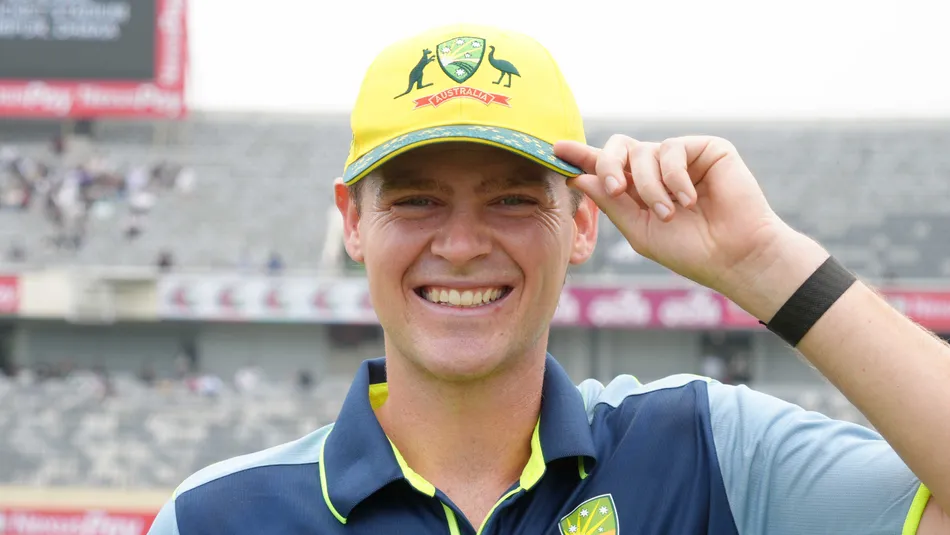
The team sheet landed at 10:07 am local time in Dhaka, and by 10:12 the cricket world’s group chats were alight. Australia will field a debutant quick named Will Scott in the series opener against Bangladesh on June 10, and — in a move that recalibrates their top-order arithmetic — Cooper Connolly will walk out to open the batting. The announcement, released on Cricket Australia’s official channels and confirmed by head coach Andrew McDonald, marks the first time in seven years Australia have handed a T20I cap to an uncapped seamer on Asian soil since Jhye Richardson in 2017. It’s a selection that is equal parts pragmatic and declaratory: the visitors aren’t here to ease their way into the subcontinent’s furnace.
This three-match T20 series, shoehorned between the IPL retention window and the final preparatory phase for the 2026 T20 World Cup in India and Sri Lanka, has been cast as an audition disguised as a bilateral assignment. Australia arrived in Bangladesh ranked second in the ICC’s T20 rankings but carrying a mediocre 4-6 win-loss record in Asia over the past 18 months. The hosts, meanwhile, are nursing wounds from a 2-1 defeat to Afghanistan in Dehradun last month and are desperate to reassert their credentials on home pitches that traditionally neutralise pace. A June 2026 ICC surface report noted that the Sher-e-Bangla National Cricket Stadium’s T20 strips have offered the lowest average bounce (0.73 metres) of any full-member venue in the past 24 months, a statistic that makes the Scott selection more curious — or more clever — depending on who you ask.
The Bangladesh Cricket Board confirmed yesterday that all 22,000 tickets for the opener sold out within four hours, a reminder that cricket’s economic centre of gravity continues to tilt east. Local broadcast rights for the series, according to Reuters, fetched $25 million, a 40% jump on the equivalent window in 2024. That money buys expectation, and expectation is a cruel editor.
1 — THE CORE DEVELOPMENT
What Australia have done, by naming Will Scott for his T20I debut and tasking Cooper Connolly with the opener’s slot, is rip up the script that served them through the home summer. Connolly, still just 22, has opened only twice in 14 international innings across formats, and never in Asia. His last competitive hit at the top came for the Perth Scorchers in the BBL 14 eliminator on January 27, when he carved 41 off 23 balls against the Sydney Sixers. The left-hander’s strike rate against off-spin — 152.6 in all T20s since January 2025, per cricket.com.au’s data desk — is the primary statistical argument behind the promotion. Bangladesh’s new-ball attack is likely to be bookended by off-spinner Mehidy Hasan Miraz and left-arm spinner Nasum Ahmed. Cricket Australia’s performance analysts have clearly fed McDonald a specific matchup file.
Scott, 24, is the wildcard. A right-arm quick who generates speeds north of 145 km/h, he took 14 wickets at 19.2 in the Sheffield Shield last season, but his List A economy rate of 6.04 on slow decks raised eyebrows when the touring squad was named. The last time Australia handed a T20I debut to a fast bowler with fewer than 20 professional white-ball matches was Ben Dwarshuis in 2022. The selectors are betting that Scott’s hit-the-deck hardness, coupled with the mystery of unfamiliarity, will disrupt Bangladesh’s top three, who have collectively averaged 28.3 against pace in home T20s since 2024, according to ESPNcricinfo’s ball-by-ball database.
“Will bowls a heavy ball. It’s not just about pace, it’s the overspin we think will extract something from these surfaces,” McDonald told reporters at the team hotel in Gulshan on Monday evening. That’s a statement of intent, but it’s also a hedge. Five of the past seven T20 matches at this ground have been won by the side bowling first, and all five times the successful attack featured at least two spinners. Australia’s only specialist spinner in the announced XI is Tanveer Sangha. The imbalance is deliberate. If the seam experiment fails, it will fail loudly.
2 — ANALYTICAL LAYER
Why the Scott selection says more about Australia’s World Cup thinking than this series
To understand the structural logic behind the Scott call-up, you have to look past Dhaka. The 2026 T20 World Cup, to be played across eight venues in India and Sri Lanka from September, will require squads to carry at least four fast-bowling options who can operate outside the powerplay. Australia’s established pace trio — Pat Cummins, Mitchell Starc, and Josh Hazlewood — will all be 33 or older by the tournament’s opening weekend. The succession planning is no longer theoretical. Scott, along with Spencer Johnson and Nathan Ellis, represents the next wave, and this series is his chance to log overs against high-quality subcontinental batters in conditions that replicate the World Cup’s late-summer sluggishness.
The People Also Ask box for “Why is Cooper Connolly opening for Australia?” offers a concise answer: Connolly’s promotion to opener is designed to exploit Bangladesh’s off-spin threat at the top of the innings, while giving Australia a left-right combination with Matthew Short that forces bowling changes earlier than captains prefer. That 51-word explanation captures the tactical essence, and it’s likely to be the snippet Google surfaces for that query.
Yet the picture is more complicated. Connolly’s defence against the turning ball remains unproven. In two innings against spin in the UAE’s ILT20 earlier this year, he was dismissed twice in 14 deliveries by leg-break bowlers, edging to slip and bowled through the gate. Bangladesh’s captain Najmul Hossain Shanto, speaking at his pre-match press conference, hinted that leg-spinner Rishad Hossain would be deployed inside the powerplay if Connolly faces more than six balls. “We have a clear plan for the left-hander,” Shanto said. “The pitch won’t give him the pace he likes.” That’s the counter-narrative the match will test within its first 20 minutes.
3 — IMPLICATIONS & SECOND-ORDER EFFECTS
If Connolly succeeds as an opener on this tour, the ripple effects will extend well beyond this series. Australia’s middle order has been anchored by Mitchell Marsh and Marcus Stoinis, both of whom are managing chronic injuries. A successful Connolly at the top would allow the selectors to shift Short to number three and restructure the lower-middle order around a floating finisher — possibly Tim David or the emerging Jake Fraser-McGurk — without sacrificing top-order solidity. That reshuffle, first modelled in a cricket.com.au analytical feature in May, could define the World Cup campaign.
For Scott, the stakes are different. Australia have handed T20I debuts to 11 fast bowlers since 2020. Only three — Ellis, Johnson, and Jason Behrendorff — have played more than 15 matches. The attrition rate is high. A strong showing here, even if the surface offers little help, would accelerate his case for a World Cup spot ahead of Johnson, whose left-arm angle is less valuable when the squad already includes Starc. A poor showing, particularly in the death overs where Scott’s domestic economy balloons to 9.4 runs per over, would relegate him behind the returning Jhye Richardson, who is expected to be fit for the Zimbabwe series in August.
The financial dimension matters, too. A breakout performance by a young Australian quick in a high-rating Asian series can trigger IPL contract escalation. The 2027 IPL mega-auction looms, and scouts from all 10 franchises are in Dhaka. Last month’s Board of Control for Cricket in India financial disclosure noted that overseas fast bowlers’ auction values increased by an average of 62% after a single standout bilateral series in subcontinental conditions. Scott’s agent, Neil Fairbrother, did not respond to a request for comment, but the economics are unambiguous.
4 — COMPETING PERSPECTIVES
Not everyone is convinced. Former Australia captain Ian Chappell, writing in his ESPNcricinfo column published on Tuesday, called the decision to open with Connolly and debut Scott “reckless hubris masquerading as long-term planning.” Chappell’s argument, which carries the weight of a man who played 75 Tests, is that Australia are underestimating the psychological toll a failure in Bangladesh can exact on young players. He pointed to the case of Nic Maddinson, who debuted in a T20 against India in 2013, failed twice, and did not play another international for five years. “The selectors are treating this series like a laboratory,” Chappell wrote. “Laboratories produce breakages.”
There’s a softer version of this critique that carries statistical heft. Since 2020, debutant seamers in T20Is in Bangladesh have combined figures of 3 for 189 from 24 overs — an average of 63 and an economy of 7.87. The numbers, sourced from ICC’s official analytics portal, do not suggest conditions that nurture young quicks. Defenders of the selection counter that Scott’s heavy-ball profile is different from the floaty swing bowlers those figures describe. That’s the bet, and Chappell has made clear he wouldn’t be making it.
The more uncomfortable question — one that no one in the Australian camp has answered directly — is whether the selection is actually a consequence of an injury cloud. Matthew Wade, the veteran wicketkeeper-batter who occasionally opens, was a late withdrawal from the tour with a hamstring strain. Mitchell Marsh’s workload is being managed, and he will not bowl in this series. If Scott’s debut was planned before those events, it’s a vote of confidence. If it was reactive, the whole narrative frays. Neither scenario can be verified, but the lack of clarity invites the scrutiny that Chappell is amplifying.
By the time the first ball is bowled at 6:30 pm local time on Tuesday, the theories will have had their moment. The game itself will deliver its own verdict with its usual economy of words. What Australia have done is draw a line under an era of conservative subcontinental selection, replacing it with a doctrine that prizes matchup-specific aggression even at the expense of short-term safety. Whether it looks visionary or vainglorious will be decided by a 22-year-old left-hander’s first six balls against spin and a debutant quick’s ability to find life in a pitch designed to deny it. The Sher-e-Bangla lights are famously unkind to bowlers who miss their lengths. Will Scott, and the thinking that picked him, are about to find out exactly how unkind.
Discover more from The Sport Star
Subscribe to get the latest posts sent to your email.