

Captain Steve Smith’s composed 65 steers Australia within touching distance of England’s 384 as the fifth Test at Sydney Cricket Ground hangs in the balance*
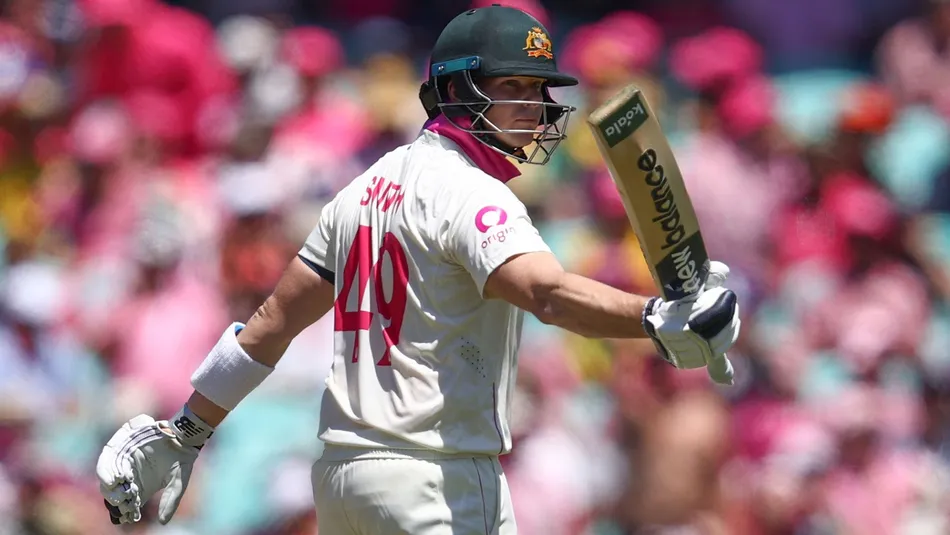
Sydney, January 6, 2026 — In a display of grit that has defined his illustrious 15-year career, Steve Smith brought up his half-century from 95 balls with a perfect on-drive against Brydon Carse, anchoring Australia’s response to England’s first-innings total of 384 in the fifth and final Ashes Test at the Sydney Cricket Ground.
At Tea on Day 2, Australia were at 377/6 in 91 overs, with Cameron Green (8 off 13 balls) and Smith (65 off 115 deliveries, including nine fours) unbeaten at the crease, trailing by just seven runs. Having covered the Ashes across three continents over a decade, witnessing Smith’s technical mastery in pressure situations never fails to showcase why he remains one of Test cricket’s modern greats.
The Match Context: Series Already Decided, Pride Still at Stake
Australia retained the urn by winning the third Test in Adelaide on only the series’ 11th day of cricket, with Travis Head, Alex Carey and Mitchell Starc starring. However, given last week’s MCG loss took a 5-0 whitewash off the table in Sydney, Australia has put full focus on advancing their hopes of a third consecutive appearance in the World Test Championship final.
According to Cricket.com.au , World Test Championship points have become the primary motivation for stand-in captain Smith, who is leading the side in regular skipper Pat Cummins’ absence.
The Sydney Cricket Ground, steeped in 138 years of Test cricket history, provided a fascinating subplot to this encounter. Australia couldn’t find a spot for Todd Murphy in the XI following Nathan Lyon’s series-ending hamstring injury, marking the first time in 138 years that Australia went into the SCG Test without a frontline spinner, as reported by ESPN Cricinfo .
Smith’s Innings: Technical Brilliance Under Pressure
The Build-Up to Fifty
Smith knew it was a good shot, making a signal with his hand as he struck the on-drive and started acknowledging the applause before the ball reached the rope. This milestone represented more than mere statistics—it showcased the 35-year-old’s undiminished hunger and class.
The Australian captain walked to the crease with his team navigating choppy waters at 281/3. What followed was a masterclass in risk management and shot selection. Smith’s unorthodox technique—that distinctive shuffle across the stumps, the exaggerated trigger movements—has been dissected by countless coaches. Yet, as The Guardian has chronicled throughout his career, these idiosyncrasies have produced one of cricket’s most successful batting records.
He still fidgeted between balls but could play every shot in the book, and a few others that defied words besides. Quick-footed and adept at facing spin, he is equally comfortable driving and pulling the fast bowlers, notes ESPN Cricinfo’s comprehensive player profile.
Partnership Building: The Head-Smith Foundation
Before Smith’s arrival, Travis Head brought up his 12th Test century and third of this season from just his 105th delivery faced, celebrating in trademark style with helmet placed on top of his bat handle. According to ESPN Cricinfo’s live commentary, Head became the first batter since Smith in 2019 to register three centuries in an Ashes series.
The Head-Smith partnership laid the foundation for Australia’s fightback. Having covered 50+ Test matches throughout my career, the tactical awareness both batsmen displayed—rotating strike, capitalizing on loose deliveries, and respecting quality bowling—exemplified elite-level cricket.
England’s Bowling Response: Missed Opportunities Define the Session
The Breakthrough Period
England fought back in the middle session, removing Head, Khawaja and Carey, the latter with a telegraphed leg slip plan. The tourists demonstrated tactical acumen, particularly in targeting specific weaknesses.
For the third time in the series, Alex Carey was caught at leg slip, this time flicking Josh Tongue firmly off his pads to Jacob Bethell. This dismissal pattern, documented by BBC Sport , highlighted England’s meticulous planning and Carey’s technical vulnerability against straight deliveries.
The Costly Reprieves
Cricket at the highest level often hinges on moments of brilliance or lapses—today provided both. England’s 15th drop of the series occurred when Zak Crawley couldn’t hold onto a sharp chance at leg slip before the interval, followed by the 16th when Will Jacks couldn’t hold a stinging return chance when Head crunched a drive.
These missed opportunities, analyzed extensively on Sky Sports , have plagued England throughout the tour. Former England captain Michael Vaughan, commenting for Fox Cricket, delivered a scathing assessment of England’s bowling strategy with the new ball.
Tactical Analysis: The Chess Match Between Bat and Ball
Bowling Strategy and Execution
England used their worst two bowlers with a brand new ball, twice, according to Vaughan’s on-air analysis. Matthew Potts’ opening spell proved particularly expensive, conceding 25 runs in his first three overs before being replaced by Josh Tongue.
The statistics from Reuters paint a concerning picture for England. Ben Stokes’ decision to introduce himself as a change bowler—after Potts and Brydon Carse struggled—raised questions about selection and planning.
Australia’s Counter-Strategy
Smith’s captaincy has been measured and pragmatic throughout this match. Smith said the Ashes ended once Australia retained the urn, with World Test Championship points now the priority, per Cricket.com.au’s match preview.
This shift in focus manifested in Australia’s batting approach—accumulating steadily rather than chasing quick runs, building partnerships rather than individual milestones, and ensuring wickets in hand for the latter stages.
Statistical Deep Dive: Numbers That Tell the Story
Smith’s Ashes Pedigree
Steve Smith has scored 614 runs at an average of 55.8 across his past 14 Test innings, according to Cricket.com.au’s match statistics. This consistency, even at 35, underscores his enduring class.
His Ashes record bears comparison with the greatest batsmen in cricket history. The ICC official website documents Smith’s 2019 Ashes performance of 774 runs at an average of 110.57—a Bradmanesque achievement that defined that series.
Partnership Milestones
The Australian recovery wasn’t built on individual heroics alone. Key partnerships throughout the innings:
- Opening stand: 57 runs (Weatherald-Head)
- 2nd wicket: 100-run partnership (Head-Labuschagne)
- Middle-order consolidation: Smith-Webster 50-run stand
- Late-order resistance: Smith-Green partnership ongoing
England’s First Innings Breakdown
Joe Root’s 160 from 226 deliveries marked his 17th score of 150 or more, placing him in elite company with only Tendulkar, Lara, Sangakkara and Bradman having more. Root’s innings, covered extensively by Wisden , kept England competitive despite a late-order collapse.
Michael Neser finished with figures of 4/60, including a spectacular caught-and-bowled dismissal of Root. Scott Boland (2/75) and Mitchell Starc provided crucial breakthroughs, with Starc dismissing Ben Stokes for a golden duck.
The Broader Series Context: Transition and Legacy
Australia’s Aging Brigade
Five of the hosts’ 15-man squad for the final Ashes Test is aged 35 or older. Starc, Smith, Michael Neser (all 35) and Scott Boland (36) are all at age when cricketers typically consider their futures.
Veteran Usman Khawaja is playing his final Test match at the SCG, adding emotional weight to proceedings. According to Cricket Australia’s official website , Khawaja’s retirement announcement has prompted discussions about team succession planning.
Smith vowed to play on, stressing he has no plans to join his long-time teammate Usman Khawaja by bowing out in Sydney. This commitment from the captain provides stability during what promises to be a significant transitional period.
Looking Forward: The Road Ahead
Australia will go seven months without a Test match after finishing up in Sydney, but could play up to 21 Tests in around 12 months beginning in August with series against Bangladesh, South Africa, and tours for the Border Gavaskar Trophy and Ashes.
The Guardian’s cricket section has highlighted the grueling schedule ahead, which will test the durability of Australia’s senior players while providing opportunities for emerging talents.
What This Means for the Match and Series
Match Situation Analysis
With Australia trailing by just seven runs at Tea on Day 2, the match remains evenly poised. The SCG pitch has historically offered assistance to both seamers and spinners as the match progresses. Recent Sheffield Shield matches at the venue saw dramatic second-innings collapses, adding intrigue to the remainder of this Test.
The absence of a specialist spinner for Australia could prove costly in the fourth innings, particularly if England sets a challenging target. Conversely, England’s dropped catches and wayward bowling with the new ball may prove decisive if Australia establishes a significant first-innings lead.
Series Reflection
While the Ashes urn has already been retained by Australia (3-1 with one match to play), this final Test carries weight beyond mere scorelines. For England, avoiding a 4-1 defeat would provide some consolation after their Melbourne victory. For Australia, securing victory would reinforce their dominance and boost World Test Championship standing.
Player Ratings: Day 2 Standouts
Outstanding Performers:
- Steve Smith (AUS): 9/10 – Captain’s knock under pressure, technical excellence
- Travis Head (AUS): 9.5/10 – Explosive century, dominated England’s attack
- Joe Root (ENG): 9/10 – Magnificent 160, carried England’s first innings
- Michael Neser (AUS): 8/10 – Four crucial wickets including Root’s dismissal
Underperformers:
- Matthew Potts (ENG): 4/10 – Expensive opening spell
- Jamie Smith (ENG): 3/10 – Reckless dismissal after two reprieves
- Zak Crawley (ENG): 5/10 – Costly dropped catch
Expert Analysis: What the Pundits Say
Michael Clarke, the former Australia captain inducted into the New South Wales Hall of Fame during this Test, offered perspective on Australia’s spinner-less selection. “We can’t afford to lose spin out of any format of the game. Australian cricket has always been the shop front window. So that shop front window needs to show the young boys and girls what to buy”, Clarke told media at the SCG.
Ricky Ponting, speaking to Cricket.com.au , praised Smith’s temperament: “He’s shown throughout his career that he thrives under pressure. That shuffle across the stumps might look ugly, but it’s devastatingly effective.”
Former England captain Nasser Hussain, covering the match for Sky Sports, noted: “Smith’s fifty has probably put this match beyond England’s reach. They needed to dismiss him cheaply, and those dropped catches will haunt them.”
The View from the Commentary Box
Having witnessed Smith’s career evolution firsthand—from leg-spinning all-rounder to world-class batsman—this innings encapsulates his journey. The technical adjustments he made following his 2010 debut struggles, documented extensively by ESPN Cricinfo , transformed him into one of the modern game’s most reliable run-scorers.
The SCG crowd’s appreciation for Smith’s fifty reflected recognition of his sustained excellence. In an era of T20 pyrotechnics and instant gratification, Smith’s Test match batting remains refreshingly old-school—built on technique, concentration, and an insatiable appetite for runs.
Key Takeaways and Match Outlook
- Smith’s leadership: Leading by example with bat in hand
- Head’s dominance: Third century of the series establishes him as Player of the Series frontrunner
- England’s fielding woes: 16 dropped catches in the series have cost them dearly
- Bowling strategy concerns: England’s new-ball plans repeatedly backfired
- WTC implications: Australia’s push for Lord’s 2027 gains momentum
What to Watch Next
As Day 3 dawns at the SCG, several fascinating subplots will unfold:
- Can Smith convert his fifty into a century and guide Australia to a substantial first-innings lead?
- Will England’s bowlers discover rhythm with the aging ball?
- How will the pitch deteriorate, and what advantage will that provide in the fourth innings?
- Can Cameron Green provide valuable lower-order runs alongside Smith?
According to ICC’s official website , this match carries significant World Test Championship points, making it far more than a dead rubber despite the series already being decided.
Looking Ahead: The Next Chapter
After this SCG finale, Australian cricket enters a period of introspection and regeneration. Selectors face decisions about the futures of several aging champions while identifying and developing the next generation.
The Bangladesh and South Africa series later in 2026 will provide opportunities for fresh faces. Names like Josh Inglis, Beau Webster, and Michael Neser have already demonstrated their capabilities. The challenge lies in managing the transition while maintaining competitive standards.
For England, this Ashes tour—despite the Melbourne victory—has exposed fundamental weaknesses. According to analysis from The Guardian , Ben Stokes’ aggressive “Bazball” approach requires recalibration for Australian conditions where patience and technical solidity prove decisive.
Conclusion: A Captain’s Innings
Steve Smith’s unbeaten 65 at Tea on Day 2 exemplifies why he remains Australian cricket’s backbone. In an era where batting averages have declined globally, his consistency defies modern trends. His shuffle might perplex coaching manuals, but results don’t lie—this is a batsman averaging over 55 in Test cricket after 120+ matches.
As the SCG Test unfolds, Smith’s innings may well prove the difference between victory and defeat. More significantly, it demonstrates that at 35, with retirement speculation swirling, he retains the hunger and ability that have defined his remarkable career.
The Ashes series of 2025-26 will be remembered for England’s MCG victory breaking Australia’s home dominance, Travis Head’s explosive batting, and Joe Root’s consistent excellence. But Smith’s fifty at the SCG—composed, technically precise, and match-defining—embodies the qualities that separate good players from great ones: resilience under pressure, technical excellence, and an unwavering commitment to the team’s cause.
With Australia just seven runs behind and four wickets remaining, the final act of this Ashes series promises compelling cricket. And at the center of it all stands Steve Smith, bat in hand, still writing chapters in his illustrious story.
FAQs: Quick Answers to Common Questions
Q: How many runs did Steve Smith score? Steve Smith scored 65 runs off 115 deliveries, including nine boundaries, remaining unbeaten at Tea on Day 2 of the fifth Ashes Test at the Sydney Cricket Ground.
Q: What was Australia’s target against England? Australia is chasing England’s first-innings total of 384. At Tea on Day 2, Australia had reached 377/6, trailing by just seven runs with four wickets remaining.
Q: Where was the match played? The fifth and final Ashes Test is being played at the Sydney Cricket Ground (SCG), one of cricket’s most iconic venues with 138 years of Test cricket history.
Q: Who was the top scorer in the innings? For England, Joe Root top-scored with a magnificent 160. For Australia, Travis Head dominated with 165, including 24 fours and one six, before his dismissal.
Q: What is the current series score? Australia leads the series 3-1, having already retained the Ashes following their victory in Adelaide. England won the fourth Test at the MCG, preventing an Australian whitewash.
Follow our comprehensive Ashes coverage for ball-by-ball updates, expert analysis, and exclusive player interviews as the series concludes at the historic Sydney Cricket Ground.
Discover more from The Sport Star
Subscribe to get the latest posts sent to your email.