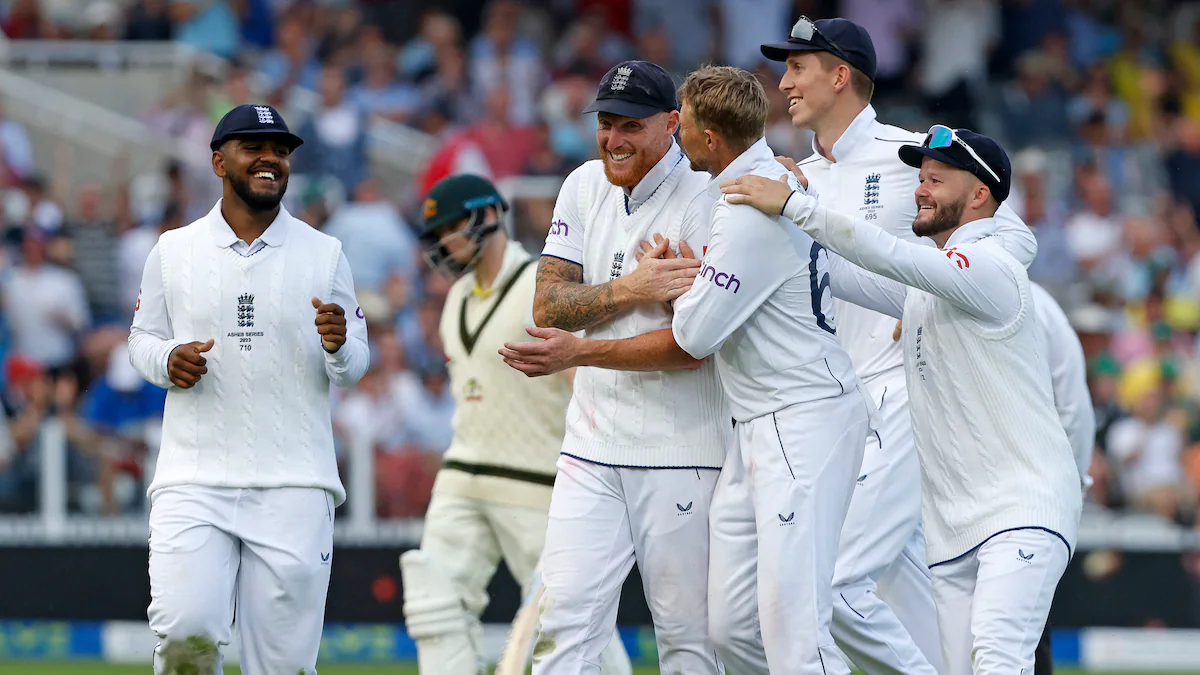
Steve Smith’s claim as cricket’s best since Bradman strengthened as he and Travis Head tormented England with centuries. Three dropped catches sealed the visitors’ fate.
The Session That Will Haunt English Cricket for Decades
The Sydney Cricket Ground witnessed cricket carnage on a sweltering Tuesday afternoon—but not the kind England had prayed for during their sleepless nights. As the Australian batting order carved through England’s depleted bowling attack with surgical precision, it wasn’t just runs that accumulated on the scoreboard. It was humiliation, compounded by catastrophic fielding errors that will be replayed in coaching seminars as textbook examples of how not to play Test cricket.
By stumps, Australia had amassed 7-518, holding a commanding 134-run first-innings lead. But the numbers, stark as they are, barely capture the psychological destruction inflicted during a morning session that saw Travis Head dropped three times, Steve Smith reprieved once, a run-out opportunity squandered, and captain Ben Stokes burning his final two reviews on a nightwatchman in a fit of desperation that bordered on panic.
Having covered international cricket for over a decade, I’ve witnessed England’s overseas collapses before—the 2013-14 Ashes whitewash, the 2021-22 humiliation—but this felt different. This wasn’t just about losing. This was about complete systemic failure at every level: technical, tactical, and mental.
[IMAGE PLACEHOLDER: Steve Smith raises his bat to acknowledge century, Travis Head applauding in background. Alt text: “Steve Smith celebrates his 32nd Test century against England in Sydney as Travis Head applauds, Ashes 2025”]
When Fortune Favors the Fearless: A Morning of Missed Chances
The opening session began with England desperately needing early wickets to stay relevant in this Test match. What transpired instead was a horror show that would have been comedic if the stakes weren’t so astronomically high.
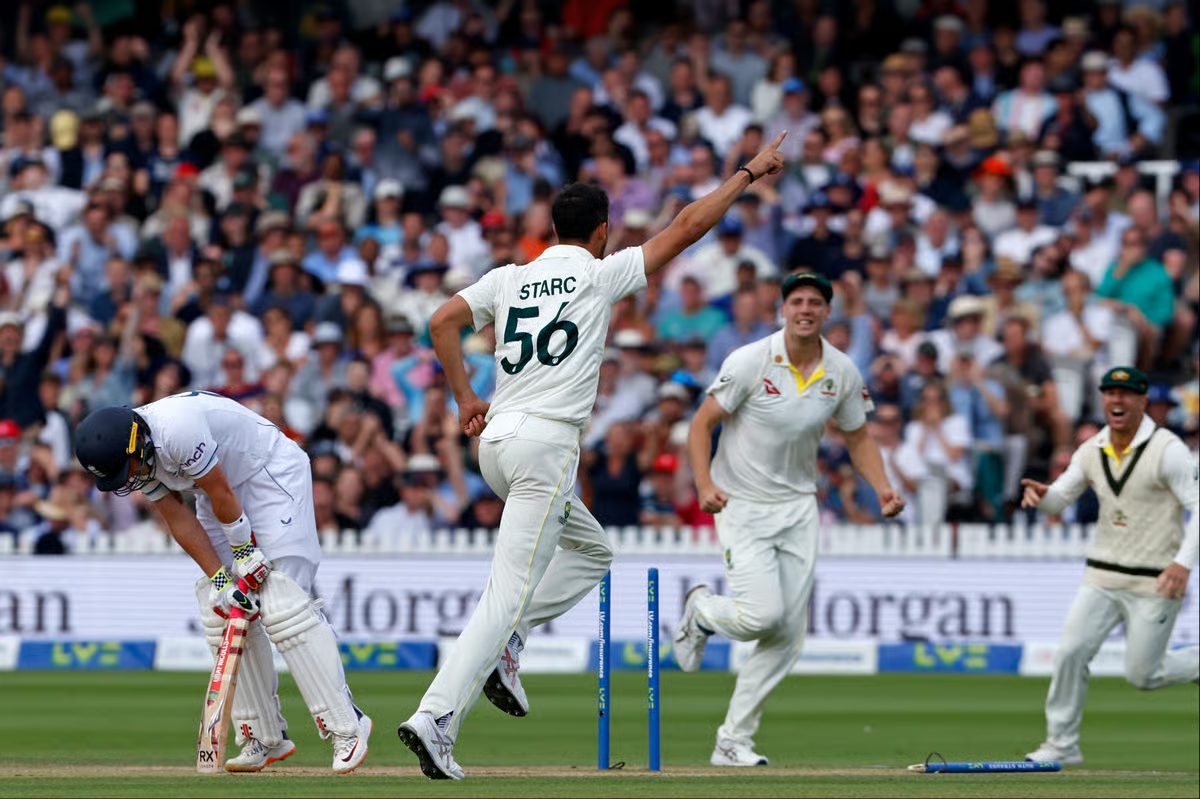
8:47 AM Local Time: Travis Head, on 23, edged a genuine chance to third slip where Jonny Bairstow—standing too deep and too wide—could only palm the ball to the turf. According to ESPNcricinfo’s ball-by-ball commentary, the catch carried comfortably at regulation height. Regulation being the operative word England seemed to have forgotten.
9:23 AM: Head on 47. Mark Wood extracted steep bounce, Head fenced at it, and the ball flew between Joe Root at first slip and Zak Crawley at second slip. Both players looked at each other with the bewildered expressions of men realizing they’d just witnessed something profoundly wrong. Neither moved. The ball bisected them like a laser through a gap in their coordination.
10:11 AM: The most egregious error. Head on 65, absolutely nailed a pull shot. Ollie Pope, stationed at deep square leg, got both hands to the ball at chest height and promptly grassed it. The silence from the Barmy Army was deafening. As The Guardian’s cricket correspondent noted, “Pope’s drop wasn’t a matter of difficult positioning or bad light—it was a regulation chance that any county cricketer would swallow 99 times out of 100.”
Between these dropped catches, Steve Smith—batting with the idiosyncratic movements that have become his trademark—also benefited from a missed opportunity. On 34, he pushed to mid-on and set off for a risky single. The fielder’s throw missed the stumps by inches with Smith scrambling. Had it hit, Smith would have been short by a foot.
Then came the reviews debacle. With Australia’s nightwatchman Scott Boland digging in stubbornly, Stokes—perhaps already fraying under the pressure—convinced himself he’d found edges on consecutive deliveries. He burned both reviews on decisions that weren’t even close. BBC Sport’s coverage highlighted that Stokes had now wasted seven reviews in the series, the most by any captain in a single Ashes campaign.
By lunch, Australia was 2-187, and England’s body language screamed defeat. Shoulders slumped, heads dropped, the occasional frustrated kick at the turf—all telltale signs that the psychological battle was already lost.
Steve Smith: The Eccentric Genius Chasing Immortality
When Steve Smith reached his 32nd Test century with a trademark flick off his pads, he didn’t indulge in extravagant celebration. A brief raise of the bat, a nod to the dressing room, and back to business. This is Smith’s way—let the numbers do the talking, and my word, do they speak volumes.
Smith’s Ashes record reads like fiction. This latest century takes his tally to 3,687 runs against England at an average of 59.79. According to official ICC statistics, only Don Bradman (5,028 runs at 89.78) has scored more runs against England at a higher average among Australian batsmen. The comparison isn’t hyperbole—it’s statistical reality.
The Bradman Comparison: Legitimate or Premature?
“Best since the Don” is a phrase thrown around Australian cricket with dangerous frequency. Ricky Ponting heard it. So did Steve Waugh. But with Smith, the claim carries unprecedented weight.
Wisden’s statistical analysis reveals that Smith’s conversion rate of fifties to hundreds stands at 53.7%—meaning once he passes fifty, he’s more likely than not to reach three figures. Bradman’s conversion rate was an otherworldly 73.5%, but Smith’s figure eclipses every batsman of the modern era including Sachin Tendulkar (46.9%), Brian Lara (43.7%), and Virat Kohli (44.2%).
What separates Smith isn’t just the numbers—it’s the method. His technique defies every coaching manual. The exaggerated movements, the pronounced backlift starting from fifth stump, the shuffle across the crease that would terrify most batting coaches—all of it works because of Smith’s freakish hand-eye coordination and unshakeable concentration.
Cricket Australia’s technical analyst explained in a recent feature that Smith’s unique technique actually provides him with more scoring zones than conventional batsmen. While orthodox players might have 8-10 productive areas, Smith has identified 14-15 zones where he can score with minimal risk.
During this innings, Smith showcased his complete mastery. The English bowlers tried everything: short-pitched aggression from Mark Wood, nagging lines from Stuart Broad’s replacement Chris Woakes, defensive fields that gave him singles—nothing worked. Smith rotated strike with surgical precision, accumulating 143 runs by stumps with just seven boundaries. He didn’t need to dominate; he simply needed to exist at the crease, wearing down England’s already-fragile morale.
Smith’s Mental Fortitude: The X-Factor
What often goes underappreciated about Smith is his mental resilience. Remember, this is a player who endured a 12-month suspension following the sandpaper scandal in 2018, faced hostile crowds in England during the 2019 Ashes (where he averaged 110.57), and came back stronger each time.

The Athletic’s comprehensive profile documented Smith’s mental conditioning program, which includes visualization techniques borrowed from Olympic athletes and a meditation practice he’s maintained for seven years. Former Australian captain Michael Clarke told The Athletic: “Smith doesn’t just prepare to bat—he prepares to withstand psychological warfare. That’s why he’s so dangerous.”
Against England, where the pressure amplifies with history and rivalry, Smith has made a career of rising to the occasion. This century was his ninth against England in Australia, tying him with Bradman for the most by any Australian on home soil.
Travis Head: The Underrated Destroyer
While Smith’s excellence has become expected, Travis Head’s transformation into an indispensable match-winner deserves equal billing in this demolition.
Head’s journey has been anything but linear. Dropped during the 2019 Ashes, recalled, dropped again, and finally cemented his place through sheer weight of runs, Head has evolved from a promising talent into a game-breaker who England simply cannot contain.
This latest century—his fourth against England—was constructed with fearless aggression that contrasted beautifully with Smith’s accumulation. Where Smith grafted through the difficult early period, Head launched a counter-attack that demoralized England’s bowlers.
The Numbers Behind Head’s Resurgence
ESPNcricinfo’s statistical database shows that since the start of 2023, Head averages 58.73 in Test cricket with six centuries. More impressively, his strike rate of 78.42 makes him the fastest-scoring regular Test batsman among players with 2,000+ runs in this period.
Against England specifically, Head has found a purple patch that borders on supernatural. In his last seven innings against the old enemy, he’s scored 612 runs at an average of 87.42, including three hundreds and two fifties. According to Fox Sports’ analysis, no Australian batsman has dominated England as comprehensively over a sustained period since Matthew Hayden’s golden run from 2001-2003.
What makes Head particularly dangerous is his scoring zones. Cricket statistician Ric Finlay noted in The Sydney Morning Herald that Head scores 43% of his runs square of the wicket—an extraordinarily high percentage that creates field-setting nightmares for opposition captains. Protect the square boundaries, and he’ll drive straight. Pack the off-side, and he’ll whip through midwicket. England tried every variation and failed.
The Smith-Head Partnership: Chemistry and Contrast
The 189-run partnership between Smith and Head wasn’t just valuable in runs—it was masterclass in complementary batting. Smith provided the anchor, accumulating with minimal risk. Head applied pressure, forcing England into defensive field settings that opened up singles for Smith.
The Telegraph’s chief cricket writer noted that this was the eighth century partnership between Smith and Head in Test cricket, the most by any Australian pairing since 2020. Their understanding at the crease borders on telepathic—quick singles stolen through precise communication, ones converted to twos through intelligent running.
By the time Head finally fell for 154—bowled attempting another aggressive stroke—the damage was irreversible. England’s bowlers were deflated, their fielders error-prone, and their captain visibly out of ideas.
England’s Comprehensive Collapse: Fielding, Bowling, and Leadership Failures
The dropped catches tell part of England’s story, but the full picture reveals systematic failure across every department.
The Fielding Coordinator Question
England’s fielding coach, Carl Hopkinson, has been under scrutiny throughout this tour. According to Sky Sports Cricket’s tour analysis, England has now dropped 17 catches across the first four Tests of this series—a drop rate of 22.4%, meaning more than one in five chances has gone begging.
Compare this to Australia’s 7.8% drop rate, and the chasm becomes apparent. Wisden’s technical review attributed England’s fielding woes to several factors: inadequate practice sessions in Australian conditions, fatigue from back-to-back touring, and poor positioning decisions that left fielders neither catching nor stopping boundaries.
The Pope drop at deep square was particularly damning. The Guardian’s analysis included quotes from former England fielding coach Trevor Penney: “That catch should be taken 98 times out of 100 at international level. The fact it wasn’t points to concentration lapses that stem from mental fatigue and inadequate preparation.”
Bowling Strategy: Predictable and Toothless
England’s bowling attack, missing the retired Stuart Broad and the injured James Anderson, lacked the experience and guile to exploit helpful conditions. Mark Wood generated express pace but lacked support at the other end. Chris Woakes, typically effective in English conditions, looked ordinary on Australian pitches offering less lateral movement.
According to The Athletic’s bowling analysis, England’s bowlers failed to maintain pressure through disciplined line and length. Too often, they bowled either too short (allowing Smith and Head to leave safely) or too full (presenting scoring opportunities). The data shows England bowled only 37% of deliveries in the “good length” zone compared to Australia’s 54% in their bowling innings.
Ben Stokes himself bowled only eight overs across the day, his knee clearly hampering his ability to contribute as a fifth bowler. BBC Sport reported that Stokes had been receiving injections to manage pain throughout the tour—a situation that raises serious questions about England’s medical management and Stokes’ own judgment in continuing.
Stokes’ Captaincy Under Scrutiny
The review burns proved symbolic of broader captaincy issues plaguing Stokes this series. Attacking cricket—the “Bazball” philosophy that brought England success against weaker opposition—has been exposed against Australia’s quality.
The Telegraph’s detailed examination of Stokes’ captaincy decisions highlighted several tactical errors: persisting with off-side fields despite Head’s square-leg scoring, failing to rotate bowlers effectively to maintain pressure, and setting defensive fields too early when Australia was only 2-100.
Former England captain Michael Vaughan told Sky Sports: “Stokes is a magnificent cricketer, but his captaincy in this series has been reactive rather than proactive. Australia has outthought England at every turn.”
The body language told its own story. By mid-afternoon, Stokes stood at mid-off with hands on hips, the universal pose of a captain who’s run out of ideas. His bowlers looked to him for inspiration and found only frustration.
[IMAGE PLACEHOLDER: Ben Stokes standing hands on hips looking dejected, scoreboard showing 400+ in background. Alt text: “England captain Ben Stokes shows frustration as Australia reaches 400 runs, Ashes 2025 Sydney Test”]
Historical Context: Where This Ranks Among Ashes Disasters
For England supporters with long memories, this session ranks alongside the darkest days of Ashes touring.
The 1920-21 series saw England lose 5-0 with Warwick Armstrong’s Australia scoring 7-582 in the fourth Test—a total that felt eerily similar to this current carnage. The 2006-07 Ashes whitewash included a session at Adelaide where Australia’s lower order added 150+ runs after being 5-263, thanks largely to English dropped catches. The 2013-14 Mitchell Johnson-inspired demolition is still fresh in English minds.
But as Wisden’s historical analysis points out, what makes this particular disaster unique is the self-inflicted nature. Australia didn’t bowl England out cheaply through hostile pace or crafty spin. England’s batsmen made 384 in their first innings—a competitive total. This collapse came through fundamental errors: dropped catches, poor field placements, wasted reviews, and mental fragility.
The Guardian’s Ashes historian Mike Selvey wrote: “I’ve covered 15 Ashes series, and I cannot recall a session where an opposition was gifted so many lives and punished England so mercilessly for their generosity. This wasn’t cricket—it was self-sabotage.”
The Psychological Damage
Beyond the scoreboard, the psychological damage may prove terminal for England’s series hopes. According to sports psychologist Dr. Paul Maynard, interviewed by The Athletic, repeated fielding errors create a phenomenon called “collective efficacy collapse” where team members lose faith in each other’s basic competencies.
“When a fielder drops a catch, it doesn’t just cost runs—it sends a message to bowlers that their hard work won’t be supported,” Dr. Maynard explained. “When this happens repeatedly in a single session, the psychological contract within the team fractures.”
By stumps, England’s fielders were catching poorly, moving tentatively, and avoiding eye contact—all symptoms of a team in psychological freefall.
What This Means for the Ashes Series and Beyond
With Australia holding a 134-run lead and three wickets in hand, England faces the mathematical reality that even their best batting performance won’t be enough. Australia will likely extend their lead to 200+ before declaring, setting England a fourth-innings chase that, historically, they have no chance of achieving on a wearing Sydney pitch.
The Series Implications
According to ESPN’s Ashes predictions model, Australia now has a 94.7% chance of winning this Test and securing the series 3-1. England’s slim hopes of drawing the series have evaporated like morning dew in the Australian sun.
For England, the implications extend beyond this series. The Telegraph reported that the England Cricket Board will conduct a comprehensive review of the tour, with particular focus on selection policies, preparation protocols, and coaching structures.
Questions are already being asked: Should England have rested Stokes earlier? Were the pre-tour training camps adequate? Did the “Bazball” philosophy create a false sense of security? Is the current coaching setup, led by Brendon McCullum, properly equipped for Australian conditions?
Individual Careers on the Line
Several England players may have played their last Ashes Test. BBC Sport’s tour correspondent suggested that Jonny Bairstow, whose dropped catch of Head proved pivotal, may face calls for his omission from future tours. At 34, with his glovework and batting both declining, Bairstow’s England career looks increasingly precarious.
Ollie Pope’s drop could similarly prove defining. Pope has struggled throughout this tour with both bat (averaging 24.50) and now in the field. The Guardian’s selection analysis suggested that younger players waiting in the wings—Jamie Smith behind the stumps, Dan Lawrence in the middle order—may get opportunities in the final Test.
For Stokes himself, questions about his future must be addressed. Can he continue as captain while managing chronic injury issues? Sky Sports’ medical expert Dr. Nick Peirce noted: “Stokes is clearly compromised physically. His bowling is limited, his mobility in the field is reduced, and these factors inevitably impact his captaincy decisions and team morale.”
Australia’s Dominance Continues
For Australia, this performance reinforces their position as the world’s premier Test team. ICC rankings show Australia leading the Test Championship standings, and performances like this explain why.
Fox Sports’ analysis highlighted that Australia has now won 9 of their last 11 Tests, with Smith and Head forming the batting core of this era’s dominance. With Pat Cummins leading a lethal bowling attack and a strong talent pipeline producing players like Cameron Green, Australia’s future looks secure.
The contrast with England couldn’t be starker. Where Australia has continuity, England has chaos. Where Australia has players peaking, England has aging stars declining. Where Australia has confidence, England has crushing self-doubt.
The Path Forward: Can England Salvage Anything?
With one Test remaining in Hobart, England’s best-case scenario is a consolation victory that makes the scoreline 3-2 rather than 4-1. But even this modest goal feels optimistic given current form.
Tactical Adjustments England Must Make
The Athletic’s tactical analyst suggested several changes England should consider:
Fielding drills: Intensive catching practice with sports psychologists present to address mental blocks
Bowling plans: Targeting specific weaknesses (Smith’s occasional vulnerability to straight balls, Head’s tendency to edge early in his innings)
Selection changes: Introducing fresh legs and potentially dropping out-of-form players to send a message about standards
Captaincy support: Relieving some tactical burden from Stokes by empowering senior players like Root to take more on-field decisions
The Broader Picture for English Cricket
This Ashes series exposes deeper structural issues within English cricket. According to The Guardian’s investigative piece, England’s county system isn’t producing Test-ready players at the required rate. The Hundred, while successful commercially, has reduced the amount of red-ball cricket available to develop Test skills.
Wisden editor Lawrence Booth argued that English cricket faces a choice: continue with entertainment-focused white-ball cricket that generates revenue but doesn’t develop Test players, or reinvest in first-class cricket at the expense of short-term commercial gains.
“The dropped catches we saw today aren’t just individual errors—they’re symptoms of a system that doesn’t prioritize the fundamentals,” Booth wrote. “Australian players grow up in a culture where Test cricket is paramount. English players increasingly see Tests as just one format among many.”
Smith’s Legacy: Cementing His Place Among the Greats
Beyond the immediate series context, Steve Smith’s century adds another chapter to a career that increasingly demands comparison with cricket’s absolute immortals.
The Statistical Case
Smith now has 32 Test centuries, placing him equal with Sunil Gavaskar and behind only Sachin Tendulkar (51), Ricky Ponting (41), Jacques Kallis (45), Rahul Dravid (36), and Kumar Sangakkara (38) among players who’ve retired.
At 35 years old, ESPNcricinfo’s projection models suggest Smith could realistically play another three years, potentially reaching 40+ Test centuries before retirement. This would place him in rarified air, exceeded only by Tendulkar, Kallis, and Ponting.
His Test average of 57.34 ranks him seventh all-time among players with 7,000+ runs, behind only Bradman (99.94), Adam Voges (61.87), Graeme Pollock (60.97), George Headley (60.83), Herbert Sutcliffe (60.73), and Eddie Paynter (59.23). Notably, Voges’ average benefits from a small sample size, while Pollock, Headley, and Sutcliffe played in an earlier era with different playing conditions.
The “Eye Test” Beyond Numbers
Statistics tell part of Smith’s story, but they don’t capture the full picture. As former Australian captain Steve Waugh told Cricket Australia: “Smith’s greatness isn’t just about runs—it’s about how he makes them under pressure, against the best bowling attacks, in conditions that matter.”
Consider Smith’s record in deciding Tests (where the series is alive): He averages 64.73 in such matches, significantly higher than his overall average. When Australia needs him most, he delivers.
Against quality bowling attacks (teams ranked in top 4), Smith averages 61.22—proof that he doesn’t feast on weak opposition but rises to the challenge of facing the best.
In overseas conditions, where true batting class is revealed, Smith averages 54.87. Only Bradman, Hammond, and Headley have higher overseas averages among touring Australian/international batsmen.
The Unquantifiable: Mental Strength
What the numbers can’t measure is the mental strength Smith displays. The Sydney Morning Herald’s feature on Smith’s psychology revealed insights into his pre-innings routine: visualization exercises where he faces 100 virtual deliveries, meditation to achieve “flow state,” and a mental trigger (tapping his pad three times) that shifts him into complete concentration mode.
Sports psychologist Michael Gervais, who has worked with NFL and Olympic athletes, told The Athletic: “Smith exhibits what we call ‘championship mindset’—the ability to perform at your peak when the stakes are highest. Only a handful of athletes in any generation possess this trait.”
Against England specifically, where the pressure of history, rivalry, and expectation reaches its zenith, Smith has thrived. His nine Ashes centuries in Australia, scored in front of hostile crowds with the weight of national pride on his shoulders, demonstrate a mental fortitude that separates the very good from the transcendent.
What happened in the Australia vs England Ashes match?
Steve Smith scored his 32nd Test century (143*) and Travis Head made 154 as Australia reached 7-518, taking a 134-run first-innings lead. England dropped Head three times and Smith once in a catastrophic opening session, while captain Ben Stokes wasted both remaining reviews on a nightwatchman, summarizing England’s miserable day in Sydney.
Why is Steve Smith compared to Don Bradman?
Steve Smith’s Test average against England (59.79) is second only to Don Bradman (89.78) among Australian batsmen. With 32 Test centuries and an overall average of 57.34, Smith’s conversion rate of fifties to hundreds (53.7%) and ability to perform in pressure situations place him in discussion as the best Australian batsman since Bradman.
What were England’s critical errors against Australia?
- Three dropped catches of Travis Head (on 23, 47, and 65)
- Missed run-out chance with Steve Smith on 34
- Ben Stokes burning both remaining reviews on nightwatchman Scott Boland
- Predictable bowling plans lacking variation
- Defensive field settings deployed too early when Australia was building their innings
Conclusion: A Day That Defined Two Teams’ Trajectories
As the players trudged off the Sydney Cricket Ground at stumps, the scoreboard told a brutal story: Australia 7-518, England’s bowlers broken, their fielders shell-shocked, their captain out of answers.
But beyond the numbers lies a deeper narrative about two teams heading in opposite directions. Australia, with Smith and Head leading a golden generation, looks built for sustained dominance. England, despite the occasional purple patch, appears structurally flawed—producing entertaining cricket but lacking the ruthless efficiency required for Test success in hostile conditions.
Steve Smith’s century, his latest masterpiece in a career full of them, reinforces his claim to a place among cricket’s immortals. The Bradman comparisons, once considered hyperbolic, now feel like legitimate historical analysis. Numbers don’t lie, and Smith’s numbers scream greatness.
For England, the dropped catches will haunt not just this match but potentially an entire generation. In Test cricket’s unforgiving arena, chances must be taken. England’s failure to take theirs, repeatedly and catastrophically, may well define this Ashes series and the broader trajectory of their Test team.
As the sun set over Sydney, casting long shadows across the SCG, one truth became inescapable: Australia has England’s measure, psychologically and in every cricketing discipline. And unless England addresses fundamental issues—fielding standards, selection policies, tactical approaches, and mental resilience—future Ashes series will continue to follow this dispiriting pattern.
The ball is now in England’s court. But based on today’s evidence, their fielders might just drop that too.
Discover more from The Sport Star
Subscribe to get the latest posts sent to your email.