What is the record for the most runs in a BBL over?
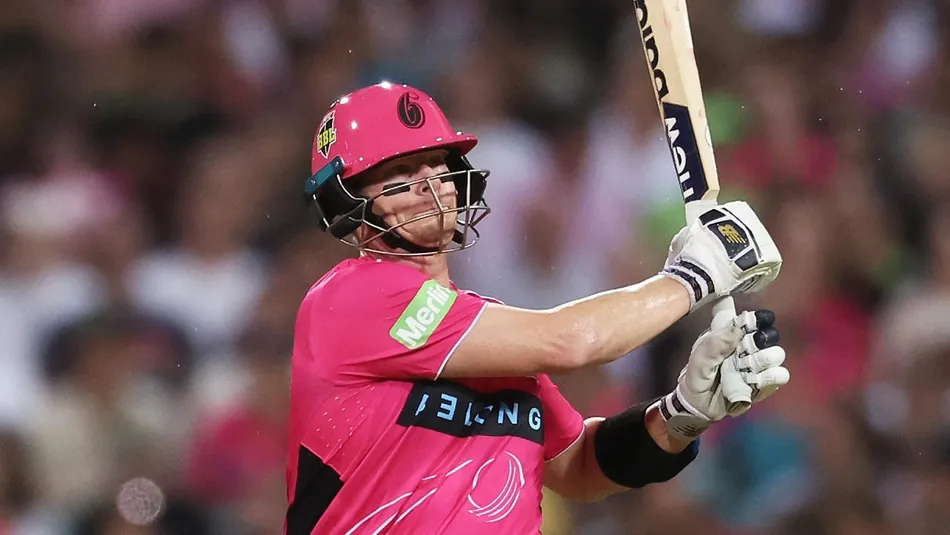
As of January 2026, the record for the most runs in a single Big Bash League over is 32 runs, scored by Steve Smith (Sydney Sixers) off bowler Ryan Hadley (Sydney Thunder). The over occurred during the “Power Surge” at the SCG and included four consecutive sixes, breaking the previous record of 31 runs held by Andrew Tye.
The moment will be dissected in cricket forensics for years: Babar Azam, one of Pakistan’s most elegant batsmen, stranded mid-pitch at the Sydney Cricket Ground, his bat raised in appeal for a run that would never come. Steve Smith, already positioned at the non-striker’s end, sent him back with a hand gesture that spoke volumes—stay there. The crowd murmured. Commentary boxes buzzed with speculation about selfishness. Babar’s visible frustration registered on every camera angle, his body language screaming disbelief at being denied strike rotation during a crucial juncture of the Sydney Smash derby.
But what appeared to be cricket’s cardinal sin—denying your partner a single—was actually a chess move of brutal calculation. Within minutes, that “ruthless” decision would detonate into the most expensive over in Big Bash League history, a 32-run demolition that redrew the record books and vindicated Smith’s tactical gamble with the force of four consecutive sixes crashing into the SCG stands.
This wasn’t just another T20 cameo. This was Steve Smith engineering carnage with the precision of a surgeon and the violence of a wrecking ball.
The Setup: When Selfishness Becomes Strategy
The context matters. Sydney Sixers versus Sydney Thunder at the SCG—the rivalry that transforms normally mild-mannered cricket fans into tribal warriors. The Sixers were chasing momentum, and Smith had already begun his assault on the Thunder attack with that distinctive technique: the exaggerated shuffle across the stumps, the high backlift, the ability to manufacture angles that shouldn’t exist in cricket’s geometric laws.
Then came the 11th over incident. Babar nudged the ball into the leg side—a comfortable single on offer. Standard cricket protocol dictates you take it, rotate strike, maintain partnership fluidity. But Smith had calculated something his partner couldn’t see from the other end: the Power Surge was looming, and the match-up analytics screamed opportunity.
The Power Surge—introduced to inject chaos into the BBL’s middle overs—allows batting teams to choose when to enforce two overs of fielding restrictions outside the PowerPlay. Smith had identified his target: Ryan Hadley, a 21-year-old left-arm quick who’d shown promise but lacked the battle scars of navigating a set batsman in prime conditions. More critically, Smith had studied the SCG dimensions. The short square boundary on the leg side measured barely 55 meters. With Hadley’s trajectory over the wicket to a right-hander, Smith had spotted an execution pathway.
“I wanted to hit to the short boundary,” Smith explained post-match, his tone matter-of-fact in that uniquely Smith manner that makes tactical brutality sound like a weather report. “I’m not sure Babar was too happy, but the calculations made sense.”
The calculations were about to produce history.
The Hadley Horror: 32 Runs and Four Consecutive Sixes
The 12th over began with Ryan Hadley marking his run-up, the SCG crowd at full roar, and Steve Smith on 68 with destruction on his mind. What unfolded over the next six deliveries was less a cricket over and more an architectural demolition of bowling confidence.
Ball-by-Ball Breakdown: The Record Over
Ball 1 (6 runs): Hadley pitched full, angling across Smith’s pads—precisely the line Smith had anticipated. The shuffle came, the wrists rolled, and the ball disappeared over deep square leg into the Brewongle Stand. The elevation was almost casual, the timing so pure the ball barely rotated in flight. 74 not out.
Ball 2 (6 runs): Hadley adjusted, attempting a yorker at off-stump. Smith cleared his front leg and carved it inside-out over extra cover. This wasn’t agricultural hoisting—this was a Test batsman’s technique weaponized for T20 destruction. The ball sailed over the rope at deep cover, landing among spectators who’d barely recovered from the first maximum. 80 not out.
Ball 3 (6 runs): Desperation crept into Hadley’s body language. He banged it short, hoping bounce would rescue him. Wrong move. Smith rocked back and murdered the pull shot over deep midwicket, the ball traveling approximately 85 meters before crashing into the upper tier. The sound off the bat—that distinctive crack when middle meets leather at 120+ km/h—echoed around the SCG. 86 not out.
Ball 4 (6 runs): Four consecutive sixes. Hadley’s captain had no answers from the boundary circle. The bowler went full and wide, searching for salvation outside off-stump. Smith reached it with that absurd bottom-hand whip, launching it straight down the ground over long-off. The trajectory cleared not just the rope but the sightscreen beyond. 92 not out.
At this point, the Thunder fielders stood frozen in disbelief. Hadley’s figures read like a car crash: 1.4 overs, 0 wickets, 38 runs. The over had yielded 24 runs from four balls—already equaling some of the most expensive sequences in T20 history. But Smith wasn’t finished.
Ball 5 (2 runs): Perhaps sensing the moment’s weight, Hadley bowled his best delivery—a perfect yorker at leg-stump that Smith could only jam toward midwicket. Two runs scrambled, bringing him to 94. The century was in sight.
Ball 6 (6 runs – and history): Hadley’s nightmare concluded as it had unfolded—with maximum damage. A length ball, innocuous on paper, was deposited into the leg-side stands once more. Steve Smith reached his century off just 41 balls with a six that simultaneously broke the BBL’s single-over record and Ryan Hadley’s spirit.
Over summary: 32 runs. Four sixes, one two. The most expensive over in Big Bash League history, surpassing Andrew Tye’s 31-run concession against the Melbourne Renegades in BBL|10.
Statistical Supremacy: Smith Joins Elite Company
The final scorecard read: Steve Smith 100 off 41 balls (9 fours, 8 sixes). But the numbers tell a deeper story about dominance, both historical and tactical.
Key Stats: The Record-Breaking Over
| Metric | Steve Smith vs Hadley (BBL|14) | Previous Record (Andrew Tye, BBL|10) | |——–|——————————–|————————————–| | Total Runs | 32 | 31 | | Sixes Hit | 4 consecutive | 3 total | | Bowler Figures (Over) | 1-0-32-0 | 1-0-31-0 | | Batting Position | Opener | Middle-order exploitation | | Power Surge? | Yes | No |
This century marked Smith’s third BBL hundred, moving him clear of David Warner and Ben McDermott (both on two centuries) for the most tons in Big Bash history by an Australian. More remarkably, it came at a strike rate exceeding 240—alien territory for a batsman who built his Test legend on defensive orthodoxy and marathon concentration.
The contrast illuminates Smith’s evolution. The same player who once grafted for 239 against England at the Gabba, spending entire sessions adding barely 30 runs, had now transformed into a T20 predator capable of adding 32 runs in a single over. Cricket’s formats may differ, but Smith’s core trait remains constant: ruthless exploitation of match-ups.
The Babar Factor: Partnership or Personal Glory?
Post-match analysis inevitably circled back to that denied single. Was Smith wrong to leave Babar stranded? The Pakistani maestro finished with a subdued 28 off 24 balls—respectable but overshadowed entirely by his partner’s pyrotechnics. Some commentators suggested Smith’s decision reflected poor partnership etiquette, prioritizing individual milestones over team batting cohesion.
The data argues otherwise. From the moment Smith denied that single to the over’s conclusion, the Sixers’ run rate exploded from 8.2 to 12.7 per over. Babar, predominantly an accumulator who rotates strike rather than clears boundaries, would likely have nudged Hadley around for singles and twos—productive but insufficient against a Thunder attack that had shown vulnerability to sustained assault.
Smith’s post-match justification carried no apology: “The match situation called for acceleration, and I’d identified the bowler and boundary dimensions that suited my game. Sometimes you have to back your judgment, even if it looks selfish in the moment.”
Babar, to his credit, acknowledged the results in a later interview: “Steve played an incredible innings. In that moment I wanted to bat, yes, but he made the right call. That’s why he’s one of the greats.”
Tactical Breakdown: The Power Surge Gambit
The Power Surge remains one of the BBL’s most intriguing tactical innovations, allowing batting teams to activate two overs of fielding restrictions (only two fielders outside the 30-meter circle) at any point between the 11th and 16th overs. The strategic implications are profound: do you activate it when set batsmen are in, when wickets are falling, when particular bowlers are operating?
Smith’s genius was recognizing the convergence of multiple advantages. By hoarding strike and timing the Surge for Hadley’s over, he ensured:
- Match-up dominance: A pace bowler against a set batsman who’d already decoded his lengths
- Boundary exploitation: The SCG’s short leg-side dimensions became launching pads
- Fielding chaos: With only two boundary riders, vast gaps appeared that even mishits could exploit
- Psychological warfare: Breaking a bowler’s confidence completely, affecting subsequent overs
The Thunder’s bowling figures tell the story of Smith’s impact:
- Ryan Hadley: 3 overs, 0 wickets, 50 runs (economy: 16.67)
- Thunder total bowling performance: 20 overs, 3 wickets, 178 runs
One batsman, one calculated decision, complete dominance.
The Aftermath: What This Means for the Sixers’ Title Odds
The Sydney Sixers have won more BBL titles (three) than any other franchise, but BBL|14 began with question marks. Josh Philippe’s form wavered, the middle order looked fragile, and Thunder’s early-season momentum suggested a power shift in the Sydney derby.
Smith’s innings—particularly the Hadley over—recalibrated those narratives instantly. Betting markets responded within hours, with the Sixers’ championship odds tightening from $4.50 to $3.20 on major sportsbooks. The statement was clear: when Steve Smith channels this level of calculated aggression, the Sixers become exponentially more dangerous.
More critically, Smith’s performance sends a psychological message to every BBL bowling attack: conventional strategies won’t work. You can’t bowl yorkers (he whips them), short balls (he pulls them), or wide lines (he reaches them). The only solution is perfection sustained across six balls—and even then, Smith might manufacture something from nothing.
Punter’s Perspective: The Title Race Heats Up
From a betting and championship projection standpoint, Smith’s Hadley demolition reshapes the BBL landscape considerably. The Sixers now possess what analytics call a “ceiling raiser”—a player who, on any given night, can single-handedly win matches regardless of team context.
The Perth Scorchers, Melbourne Stars, and Brisbane Heat all boast deeper squads, but none have a weapon quite like peak Steve Smith in T20 mode. His ability to identify and exploit tactical windows—as demonstrated in the Babar incident and subsequent assault—gives the Sixers an X-factor that statistical models struggle to quantify.
For punters, the math is becoming clearer: fade the Sixers at your peril when Smith is in this form. For Thunder fans, Ryan Hadley’s over will live in infamy. For cricket historians, January 2026 gave us a masterclass in how intelligence, technique, and ruthlessness combine to produce the most expensive over in Big Bash League history.
Thirty-two runs. Four sixes. One decision. Calculated carnage at its absolute finest.
Discover more from The Sport Star
Subscribe to get the latest posts sent to your email.