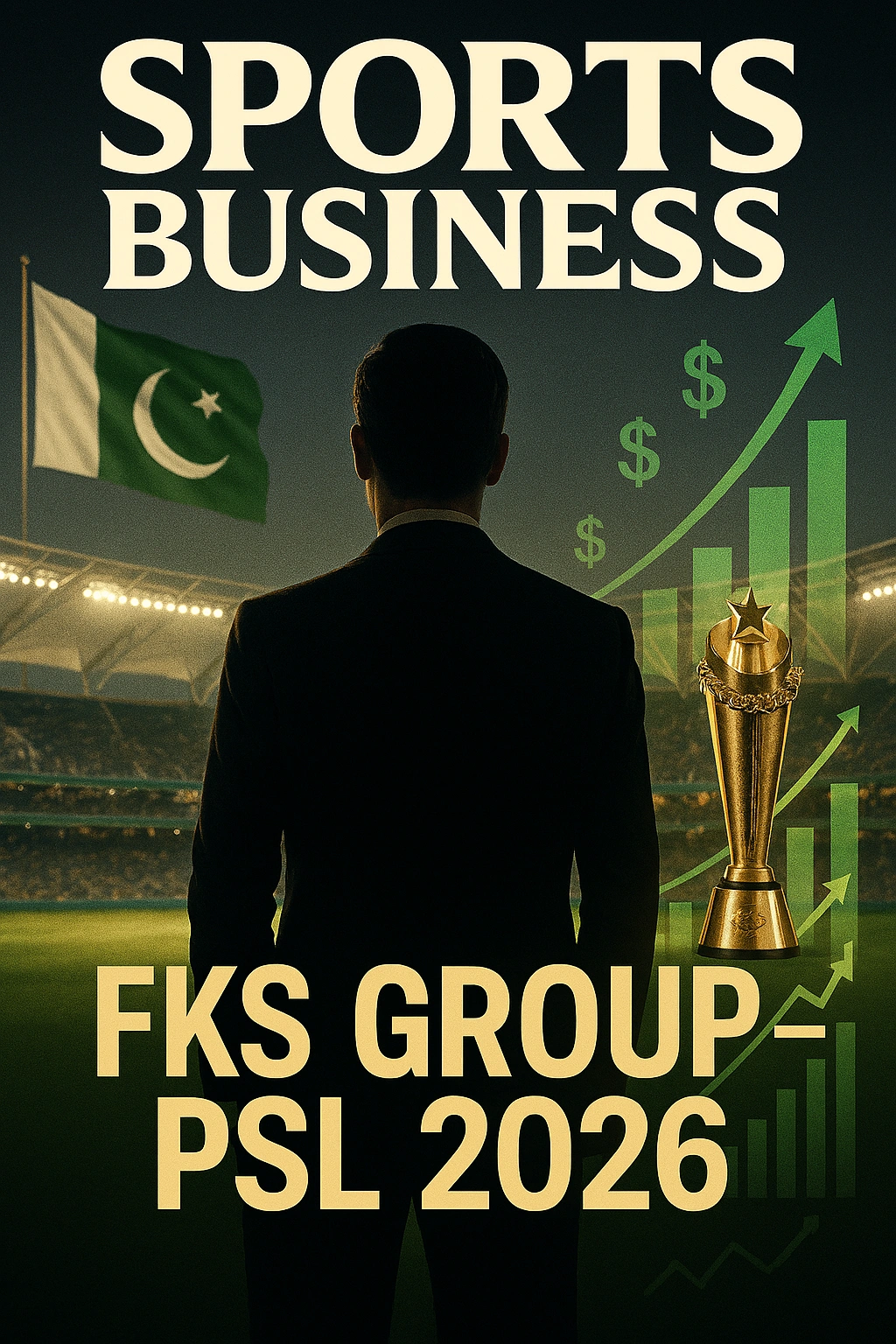
KARACHI/HYDERABAD – In a landmark development for Pakistani cricket, FKS Group, led by prominent entrepreneur Fawad Sarwar, has successfully secured ownership of a new franchise in the PSL 2026 expansion, marking one of the most significant private investments in the country’s sports history. The Hyderabad PSL team owner announcement comes as the Pakistan Cricket Board (PCB) finalizes its ambitious plan to expand the HBL Pakistan Super League from six to eight teams, with the PSL auction 2026 attracting substantial interest from business conglomerates across Pakistan.
This strategic move by Fawad Sarwar and his Oz Developers empire represents more than just a cricket investment. It signals a broader shift in how Pakistani businesses view sports franchises as legitimate portfolio diversification opportunities, mirroring trends seen in the Indian Premier League and other global T20 competitions.

Quick Facts: FKS Group’s PSL Entry
Who is FKS Group?
FKS Group is a diversified Pakistani conglomerate led by entrepreneur Fawad Sarwar, primarily known for its real estate arm Oz Developers, with extensive operations across construction, hospitality, and now sports entertainment.
What happened?
FKS Group won the competitive bidding process to own one of two new PSL franchises for the 2026 season, specifically securing rights to field a team representing Hyderabad.
When is PSL 2026?
The PSL draft 2026 date is expected in late January 2026, with the tournament scheduled to commence in February 2026, following the expanded 10-team format logistics.
Investment Scale
While official figures remain undisclosed, industry analysts estimate the franchise acquisition at approximately PKR 800 million to 1.2 billion (USD 2.8-4.2 million), based on comparable PSL team valuations.
Why Hyderabad?
Hyderabad represents an untapped cricket market in Sindh with a passionate fan base, robust infrastructure potential, and strategic positioning for regional cricket development.
From Real Estate Empire to Cricket Dynasty: The FKS Group Story
Fawad Sarwar’s Entrepreneurial Journey
Fawad Sarwar built his business reputation through Oz Developers Pakistan, transforming the company from a modest construction firm into one of Pakistan’s recognized real estate brands. His approach has consistently focused on identifying undervalued opportunities in emerging markets – a strategy now extending to sports franchises.
Oz Developers has delivered multiple residential and commercial projects across major Pakistani cities, with a particular concentration in Karachi, Lahore, and Islamabad. The company’s portfolio includes mixed-use developments, luxury residential towers, and commercial plazas that have collectively contributed to Pakistan’s evolving urban landscape.
What distinguishes Sarwar’s business philosophy is his willingness to enter sectors with high entry barriers but substantial long-term growth potential. According to business analysts familiar with the group’s operations, this calculated risk-taking mirrors the investment thesis behind entering the PSL ecosystem.
FKS Group’s Diversification Strategy
The FKS Group owner Pakistan has systematically expanded beyond core real estate operations into hospitality, technology services, and now sports entertainment. This diversification reflects a sophisticated understanding of portfolio management principles that major Pakistani business houses have historically employed.
Industry observers note that sports franchise ownership in Pakistan offers unique advantages:
Brand Visibility: PSL broadcasts reach over 300 million viewers across multiple countries, providing unparalleled marketing exposure that traditional advertising cannot match.
Revenue Diversification: Franchise owners benefit from multiple income streams including broadcasting rights distribution, gate revenues, merchandising, and sponsorship activations.
Asset Appreciation: PSL team valuations have grown substantially since the league’s 2016 inception, with established franchises now worth several multiples of their original acquisition costs.
Strategic Networking: Ownership positions provide access to Pakistan’s business and political elite, creating opportunities for cross-sector collaboration.
For a real estate-centric group like FKS, the cricket investment also offers counter-cyclical benefits. While property markets can experience volatility during economic downturns, sports entertainment often demonstrates resilience as consumers seek affordable entertainment options.
PSL 2026 Expansion: Transforming Pakistan’s Cricket Economy
HBL PSL’s Growth Trajectory
Since launching in 2016, the Pakistan Super League has evolved from an experimental franchise model to Pakistan’s premier sporting property. The league’s commercial success has exceeded initial projections, with broadcasting rights, title sponsorship, and team valuations all showing consistent upward trends.
Key growth metrics illustrate this trajectory:
The PSL’s broadcast rights have grown exponentially, with the current cycle valued significantly higher than initial agreements. International viewership expanded beyond the Pakistani diaspora to include cricket enthusiasts across South Asia, the Middle East, and parts of Africa.
Sponsorship revenues have matured from primarily domestic brands to include multinational corporations seeking exposure in Pakistan’s 230-million-person market. Major global brands now view PSL as a strategic platform for market entry and consumer engagement.
Player salaries and auction prices have increased substantially, with top-tier international cricketers now commanding premium fees comparable to other major T20 leagues. This financial gravity has helped attract marquee international players despite security concerns that initially plagued the league’s early years.
The New Teams Auction Process
The HBL PSL teams auction for expansion franchises followed a structured, transparent process designed to maximize competitive interest while ensuring financial credibility. The PCB established stringent criteria for prospective owners, including:
Financial Capability: Bidders required demonstrated financial strength through audited statements, bank guarantees, and proof of sustainable funding sources for multi-year commitments.
Infrastructure Commitment: Successful bidders must invest in grassroots cricket development, training facilities, and community engagement programs in their designated cities.
Professional Management: The PCB mandated that franchise owners establish professional management structures rather than owner-operated models, ensuring long-term institutional stability.
Brand Development: Owners must commit to comprehensive marketing and fan engagement strategies, including digital presence, merchandise programs, and community outreach.
The PSL auction 2026 attracted interest from diverse business groups including textile conglomerates, technology companies, media houses, and real estate developers. FKS Group’s successful bid reportedly emphasized their integrated approach combining financial strength, regional connectivity through Oz Developers’ existing Hyderabad operations, and commitment to youth cricket development.
Why Hyderabad and Sialkot?
The selection of Hyderabad and Sialkot as expansion cities reflects the PCB’s strategic thinking about cricket’s geographical footprint in Pakistan.
Hyderabad’s Cricket Heritage: Pakistan’s second-largest city in Sindh province boasts a rich cricket tradition, having produced numerous international cricketers over decades. The city’s Niaz Stadium has hosted domestic cricket regularly, and local enthusiasm for the sport remains exceptionally high. However, Hyderabad has historically lacked representation in Pakistan’s premier cricket competitions, creating pent-up demand for a home team.
The city’s population exceeds 1.7 million, with a broader metropolitan catchment approaching 3.5 million potential fans. This demographic scale provides a substantial fan base for match attendance and merchandise sales, while the city’s central Sindh location makes it accessible to surrounding districts.
Sialkot’s Sporting DNA: Known globally as Pakistan’s sports goods manufacturing hub, Sialkot produces cricket equipment exported worldwide. The city’s sporting culture runs deep, with exceptionally high cricket participation rates at grassroots levels. A PSL franchise here creates natural synergies between manufacturing heritage and sporting representation.
Economic Impact Projections
Economic impact studies conducted for similar franchise expansions in other cricket leagues suggest significant multiplier effects for host cities. Each PSL match generates direct economic activity through:
- Hotel occupancy for visiting teams, officials, media, and traveling fans
- Restaurant and hospitality revenues during match days
- Transportation services including taxis, ride-sharing, and logistics
- Retail spending in surrounding commercial areas
- Media production expenses for broadcast crews
Beyond direct match-day impact, franchise presence stimulates:
- Infrastructure development including stadium renovations and training facilities
- Employment creation in team operations, marketing, and event management
- Tourism promotion as cities gain national and international visibility
- Real estate value appreciation in areas surrounding cricket facilities
- Youth development programs creating coaching and administrative jobs
The Auction Breakdown: How FKS Secured the Winning Bid
Inside the Bidding Process
The PSL teams 2026 acquisition process unfolded over several months, beginning with the PCB’s formal announcement of expansion plans and culminating in sealed bid submissions followed by evaluation phases.
Industry sources familiar with the process indicate that FKS Group’s winning proposal distinguished itself through several factors:
Financial Structure: Rather than relying solely on corporate balance sheet strength, FKS presented a syndicated investment model incorporating strategic partners, creating a more robust financial foundation while distributing risk.
Regional Integration: Leveraging Oz Developers’ existing Hyderabad presence, the FKS proposal outlined how the franchise would integrate with the city’s commercial ecosystem, creating cross-promotional opportunities and community engagement platforms.
Youth Development Blueprint: The bid included detailed plans for establishing cricket academies, school partnership programs, and talent identification systems targeting Hyderabad and surrounding districts. This aligned perfectly with the PCB’s mandate for grassroots investment.
Professional Management Commitment: FKS committed to hiring experienced cricket administrators and franchising specialists, signaling their understanding that sports team ownership requires specialized expertise beyond general business acumen.
Investment Returns: The PSL Franchise Business Model
Understanding why FKS Group invested substantially in a PSL franchise requires examining the business model’s revenue architecture.
Broadcasting Rights Distribution: PSL franchises receive shares of central broadcasting revenues, which have grown significantly as the league expanded to new international markets. This provides predictable base revenue independent of individual team performance.
Gate Receipts: Match-day ticket sales represent direct revenue, with PSL matches typically achieving strong attendance. Premium seating, hospitality boxes, and season ticket packages create tiered pricing structures maximizing revenue per match.
Sponsorship Revenues: Franchises sell multiple sponsorship categories including:
- Title sponsorship (team name rights)
- Kit sponsorship (jersey placements)
- Official partner categories (technology, automotive, banking, etc.)
- On-ground advertising during home matches
Merchandising: Team-branded merchandise from jerseys to accessories generates margins typically ranging from 40-60% on direct sales. Successful franchises develop comprehensive merchandise ecosystems including official stores, online platforms, and licensed products.
Prize Money: Tournament performance directly impacts prize money distribution, with championship winners receiving substantial payouts. While variable, successful teams can generate significant income through competitive success.
Financial analysts estimate that established PSL franchises with strong brands and effective management can achieve operational profitability within 3-4 seasons, with franchise valuations appreciating substantially over that timeframe.
ROI Projections and Comparable Analysis
Examining existing PSL franchises provides instructive comparisons for FKS Group’s expected returns. While specific financial data remains proprietary, industry estimates suggest:
Franchise Value Appreciation: Original PSL teams acquired in 2015-2016 have likely seen valuations increase 150-300% over the eight-year period, representing attractive compound annual returns.
Operational Cash Flows: Mature franchises reportedly generate annual revenues ranging from PKR 500 million to over 1 billion, with operating margins improving as marketing efficiency increases and fan bases consolidate.
Comparable International Models: The Indian Premier League provides aspirational comparables, where franchise values have grown exponentially since inception. While Pakistan’s market size and economic conditions differ substantially, the fundamental business model demonstrates proven scalability.
Brand Valuation Premium: Beyond direct cash flows, franchise ownership creates intangible brand value for parent companies. For Oz Developers and FKS Group, association with Pakistan’s premier sports property enhances corporate reputation, facilitates business development, and provides unique marketing platforms.
PSL 2026 Schedule & Critical Dates
Tournament Format Evolution
The expansion to eight teams transforms PSL 11 from a round-robin format into a more complex tournament structure requiring careful scheduling and logistics.
The PSL 2026 schedule must accommodate:
- Increased total matches (likely 32-34 league stage matches compared to previous 30)
- Balanced home-and-away opportunities for all franchises
- Venue availability across eight cities rather than six
- International player availability windows
- Broadcasting logistics for expanded coverage requirements
PCB officials have indicated that the expanded format will likely retain the league stage, playoffs structure but potentially modify qualification criteria to accommodate eight teams competing for four playoff positions.
PSL Draft 2026 Date and Player Auction
The PSL draft 2026 date represents the first major milestone for new franchises, as this is where teams construct their playing rosters. Based on PCB’s typical timeline:
Draft Date: Expected in late January 2026, approximately 3-4 weeks before tournament commencement.
Player Categories: The draft typically includes multiple player categories:
- Platinum category (established international stars)
- Diamond category (premium Pakistani and emerging international players)
- Gold, Silver, and Bronze categories (mid-tier professionals)
- Emerging players category (uncapped Pakistani talent)
Salary Cap Structures: Each franchise operates within defined salary cap parameters, requiring strategic decisions about resource allocation. Teams must balance star power with squad depth, ensuring competitive rosters while maintaining financial sustainability.
Retention Rights: Existing franchises enjoy retention rights for limited players from previous seasons, while new franchises like FKS Group’s Hyderabad team enter with unrestricted picks but no retention advantages.
Strategic Considerations for New Teams: First-time franchise owners face unique challenges including:
- Building instant brand recognition through marquee signings
- Balancing international stars with local talent to build regional connections
- Establishing team culture and identity without historical continuity
- Creating competitive rosters while learning league-specific dynamics
Key Dates Fans Should Track
December 2025 – January 2026: Player registration window closes; final player pools confirmed for draft.
Late January 2026: PSL 2026 draft date – teams conduct player selections through multiple rounds across various categories.
Early February 2026: Pre-tournament training camps commence; franchises conduct conditioning programs and team-building activities.
Mid-February 2026: PSL 2026 opening ceremony and tournament launch; first matches begin.
March 2026: League stage concludes; playoff qualification determined.
Late March 2026: Playoffs and championship final complete the tournament.
Expert Analysis: The Investment Perspective
Sports Economy Valuations
Sports business analysts view FKS Group’s PSL franchise acquisition through multiple valuation lenses, each offering different insights into the investment’s merits.
Comparable Transaction Analysis: Recent sports franchise transactions in Pakistan and South Asia provide valuation benchmarks. While PSL franchise values remain modest compared to IPL teams (which command hundreds of millions of dollars), Pakistani franchises have shown consistent appreciation, validating the asset class.
Discounted Cash Flow Models: Financial analysts modeling PSL franchise economics typically project 8-12 year cash flow horizons, accounting for revenue growth from broadcasting deals, sponsorship escalations, and merchandise expansion. Discount rates reflect Pakistan’s investment risk profile while recognizing sports franchises’ relatively stable cash flow characteristics.
Brand Value Methodologies: Beyond direct cash flows, franchise ownership creates quantifiable brand value through media exposure, celebrity association, and cultural relevance. Marketing analysts estimate that effective PSL franchise ownership generates brand awareness equivalent to advertising spend multiples of the franchise acquisition cost.
Comparison With Other PSL Franchises
Examining existing PSL teams provides context for evaluating FKS Group’s investment:
Karachi Kings: Owned by Salman Iqbal’s ARY Group, demonstrates how media company ownership creates powerful synergies between broadcasting platforms and team properties.
Lahore Qalandars: After initial struggles, Qalandars achieved breakthrough success in recent seasons, illustrating how patient investment and effective management can transform franchise fortunes.
Islamabad United: Consistently successful both competitively and commercially, United exemplifies how strong management and strategic player development create sustainable franchise value.
Multan Sultans: Owned by the Schon Group, demonstrates how business conglomerates can effectively operate sports franchises while leveraging cross-promotional opportunities.
Peshawar Zalmi: Backed by Haier Pakistan and Javed Afridi, shows how combining corporate resources with cricket passion creates engaged fan communities.
Quetta Gladiators: Illustrates the challenges and opportunities of representing smaller markets, offering lessons for new Hyderabad and Sialkot franchises.
Long-Term Growth Potential
Several macro trends support optimistic long-term projections for PSL franchise values:
Pakistani Youth Demographics: Pakistan’s exceptionally young population (median age under 23) creates a growing consumer base for cricket entertainment and merchandise.
Digital Consumption Growth: Expanding internet penetration and smartphone adoption enable franchises to monetize digital audiences through streaming partnerships, social media engagement, and digital merchandise sales.
Broadcast Rights Escalation: Global appetite for cricket content continues growing, with streaming platforms competing for exclusive rights. This competition drives broadcasting rights values upward, directly benefiting franchise owners through revenue sharing.
Regional League Ecosystem: The success of PSL encourages similar franchise models in other cricket nations, creating potential for inter-league competitions, exhibition matches, and collaborative commercial opportunities.
Infrastructure Investment: Government and private sector infrastructure development improves stadium facilities, transportation access, and hospitality services, enhancing match-day experiences and attendance potential.
Implications for Pakistani Cricket Development
Grassroots Investment in Hyderabad and Sialkot
Perhaps the most significant long-term impact of FKS Group’s franchise ownership relates to grassroots cricket development in underserved regions.
Academy Infrastructure: New franchises typically establish training academies providing world-class coaching, facilities, and player development programs. For Hyderabad, this represents the first time local talent will access PSL-standard training infrastructure without relocating to Karachi or Lahore.
School Cricket Programs: Franchise community engagement usually includes school partnerships, providing equipment, coaching, and competitive opportunities for young cricketers. These programs identify talent while building fan loyalty among youth demographics.
Coaching Certification: Professional franchises often support coaching education programs, training local coaches in modern methodologies. This knowledge transfer creates sustainable cricket development ecosystems extending beyond the franchise’s direct operations.
Women’s Cricket Development: Progressive franchises increasingly invest in women’s cricket programs, recognizing both the competitive talent and the untapped commercial opportunities in women’s sports.
Talent Pipeline Opportunities
PSL franchise presence fundamentally alters local talent development pathways:
Identification Systems: Franchises deploy scouts and talent identification programs systematically searching for potential players. This professional approach replaces ad hoc discovery methods, ensuring talented players don’t go unnoticed.
Pathway Clarity: Aspiring cricketers gain clear development pathways from school cricket through academy systems to franchise consideration. This structure provides motivation and direction for youth investment in cricket skill development.
Performance Opportunities: Local players performing well in franchise academy systems receive opportunities in PSL drafts, particularly through emerging player categories. This creates inspirational local success stories encouraging further participation.
Professional Exposure: Even players not selected for PSL squads benefit from exposure to professional environments, coaching methodologies, and performance standards that elevate overall cricket quality in the region.
Regional Cricket Ecosystem Development
Beyond direct franchise activities, PSL team presence catalyzes broader cricket ecosystem development:
Corporate Sponsorship Attraction: Local businesses seek association with franchise success, creating sponsorship opportunities that flow into regional cricket at multiple levels.
Media Coverage Expansion: Franchise presence attracts media attention to regional cricket, providing exposure for local tournaments, player profiles, and cricket development stories.
Infrastructure Modernization: Government authorities typically invest in stadium upgrades, practice facilities, and supporting infrastructure when cities host PSL franchises, creating lasting benefits for regional cricket.
Cricket Culture Strengthening: Franchise presence elevates cricket’s cultural significance in the region, encouraging youth participation, spectator engagement, and community pride around cricket achievement.
Conclusion: FKS Group’s Strategic Masterstroke
Fawad Sarwar and FKS Group‘s entry into PSL 2026 as the Hyderabad PSL team owner represents more than a business diversification move. It signals Pakistan’s maturing sports economy where franchise ownership constitutes legitimate investment opportunities with measurable returns and strategic value.
The PSL auction 2026 outcome validates the league’s growth trajectory while demonstrating that Pakistani business leaders increasingly recognize sports properties as vehicles for brand building, community engagement, and financial returns. For Oz Developers and the broader FKS Group Pakistan portfolio, cricket franchise ownership creates unique positioning at the intersection of entertainment, marketing, and regional development.
As PSL 2026 schedule details emerge and the PSL draft 2026 date approaches, cricket enthusiasts and business observers will watch closely how FKS Group navigates first-time franchise ownership. The decisions made in player selection, management appointments, and community engagement will substantially influence whether Hyderabad quickly establishes competitive credentials and passionate fan support.
For Pakistani cricket broadly, the expansion to eight teams through additions like FKS Group’s Hyderabad franchise represents meaningful progress toward the PCB’s vision of cricket as a genuinely national sport reaching beyond traditional centers. The ripple effects through grassroots development, infrastructure investment, and regional engagement may ultimately prove more significant than the immediate tournament excitement.
The HBL PSL teams auction successfully attracting credible investors like Fawad Sarwar reinforces Pakistan’s sports industry potential despite broader economic challenges. As other Pakistani business houses observe FKS Group’s cricket venture, further private sector engagement with sports properties seems likely, potentially transforming Pakistan’s sports landscape over the coming decade.
Frequently Asked Questions
Who is the owner of FKS Group?
FKS Group is owned by Pakistani entrepreneur Fawad Sarwar, who built his business reputation primarily through Oz Developers, a prominent real estate development company operating across Pakistan’s major cities.
When is the PSL 2026 draft date?
The PSL draft 2026 date is expected in late January 2026, approximately 3-4 weeks before the tournament begins in mid-February 2026, though the PCB will announce exact dates closer to the event.
What are the PSL 2026 new teams’ names?
The two new franchises for PSL 2026 represent Hyderabad (owned by FKS Group) and Sialkot, though official team names and branding will be revealed by franchise owners closer to the tournament.
How much did FKS Group pay for the PSL franchise?
While official financial terms remain undisclosed, industry analysts estimate the franchise acquisition cost between PKR 800 million to 1.2 billion (approximately USD 2.8-4.2 million) based on comparable PSL team valuations.
How does the HBL PSL new teams auction process work?
The PCB establishes criteria for prospective owners including financial capability, infrastructure commitments, and professional management plans. Qualified bidders submit proposals evaluated on financial strength, regional development plans, and long-term sustainability, with the PCB selecting winning bids through a structured evaluation process.
Discover more from The Sport Star
Subscribe to get the latest posts sent to your email.